“Record low Antarctic sea ice ‘extremely unlikely’ without climate change”

This article was originally published on the British Antarctic Survey’s website

20 May, 2024 Press releases

Scientists at the British Antarctic Survey (BAS) have found that the record-low levels of sea ice around Antarctica in 2023 were extremely unlikely to happen without the influence of climate change. This low was a one-in-a-2000-year event without climate change and four times more likely under its effects. The results are published this week (20 May) in the journal Geophysical Research Letters.  

In 2023, Antarctic sea ice reached historically low levels, with over 2 million square kilometres less ice than usual during winter – equivalent to about ten times the size of the UK. This drastic reduction followed decades of steady growth in sea ice up to 2015, making the sudden decline even more surprising. 
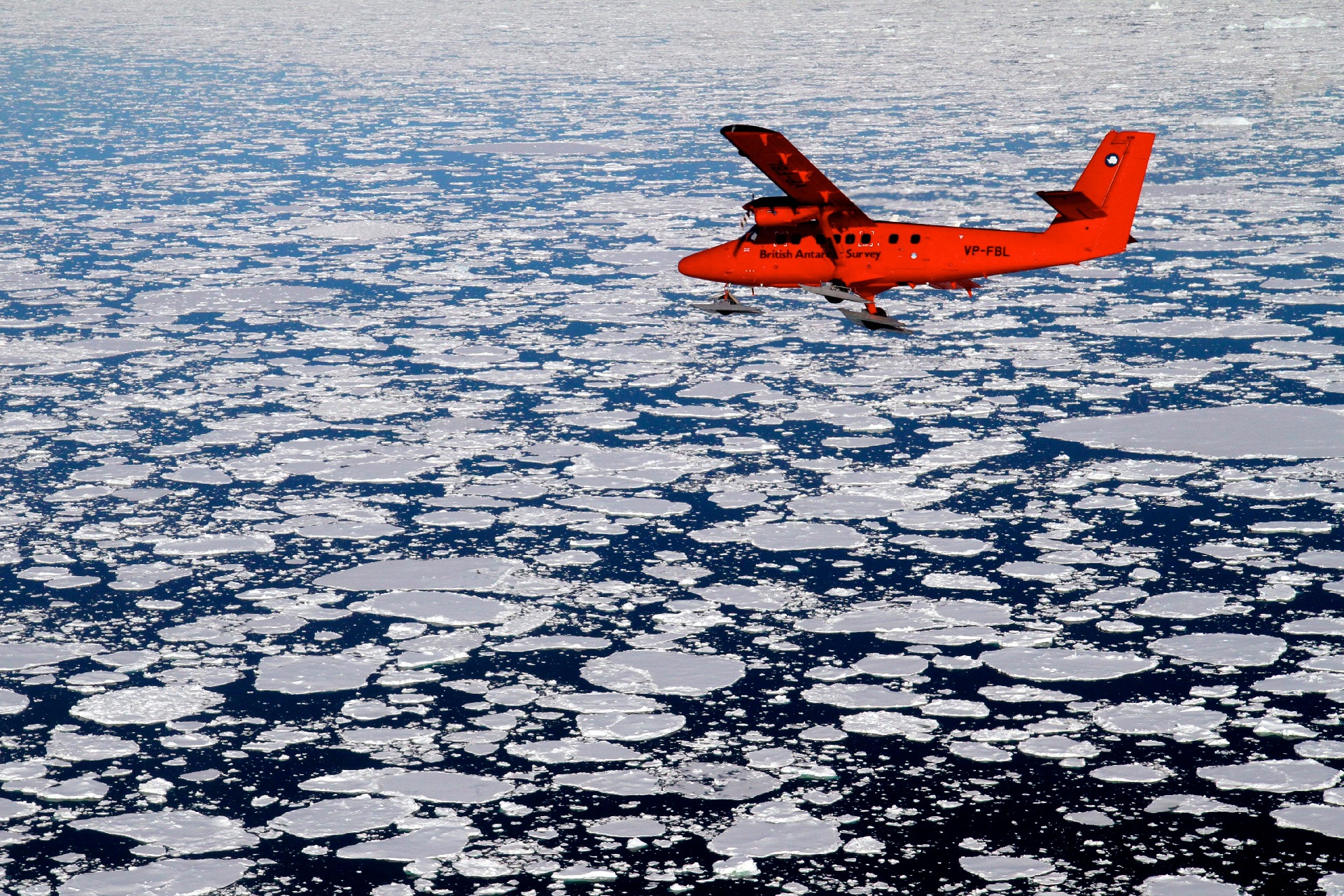
A plane flying over a body of water
A BAS Twin Otter flies over Antarctic sea ice.

Using a large climate dataset called CMIP6, BAS researchers investigated this unprecedented sea ice loss. They analysed data from 18 different climate models to understand the probability of such a significant reduction in sea ice and its connection to climate change. 

Lead author Rachel Diamond explained that while 2023’s extreme low sea ice was made more likely by climate change, it was still considered very rare according to the models.  

She says: 

“This is the first time this large set of climate models has been used to find out how unlikely 2023’s low sea ice actually was. We only have forty-five years of satellite measurements of sea ice, which makes it extremely difficult to evaluate changes in sea ice extent. This is where climate models come into their own.

According to the models, the record-breaking minimum sea ice extent would be a one- in-a-2000-year event without climate change. This tells us that the event was very extreme – anything less than one-in-100 is considered exceptionally unlikely.”
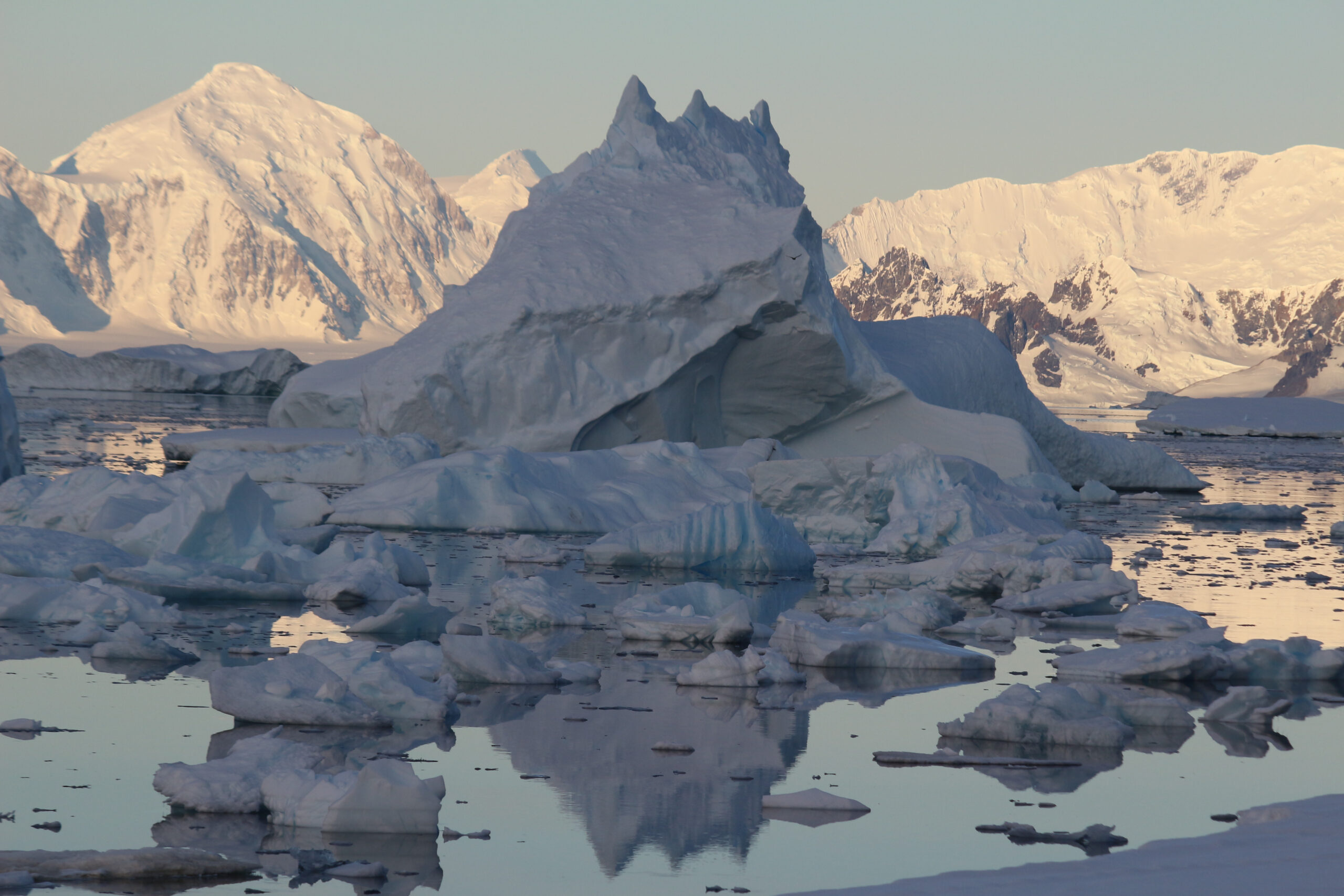
A view of a snow covered mountain
Antarctic sea ice in Ryder Bay, Antarctic Peninsula. Lloyd Peck, BAS

Caroline Holmes, a co-author on the study, said: 

“Strong climate change – i.e. the temperature changes we’re already seeing, and those expected if emissions continue to rise rapidly – in the models makes it four times more likely that we see such a big decline in sea ice extent. This suggests that 2023’s extreme low was made more likely by climate change.” 

The researchers also used the models to look at how well sea ice is likely to recover. By looking at similar events in the models, the authors found that after such extreme sea ice loss, not all of the sea ice around Antarctica returns – even after twenty years. This adds model evidence to existing observational evidence that the last few years’ low sea ice could signal a lasting regime shift in the Southern Ocean. 

Louise Sime, a co-author on the study, says: 

“The impacts of Antarctic sea ice staying low for over twenty years would be profound, including on local and global weather and on unique Southern Ocean ecosystems – including whales and penguins.” 

Satellite records of Antarctic sea ice began in late 1978 and between then and 2015, Antarctic sea ice extent increased slightly and steadily. In 2017, Antarctic sea ice reached a record low, and has been followed by several years of relatively low sea ice extent

There are many complex and interacting factors that influence Antarctic sea ice, making it hard to get a clear understanding of why 2023 was such a record-breaking year. Recent studies have highlighted the important role of ocean processes and heat stored below the surface, and warm sea surface temperatures during the first half of 2023 may also have contributed. Strong variations in north-to-south winds and storm systems also played a role. 
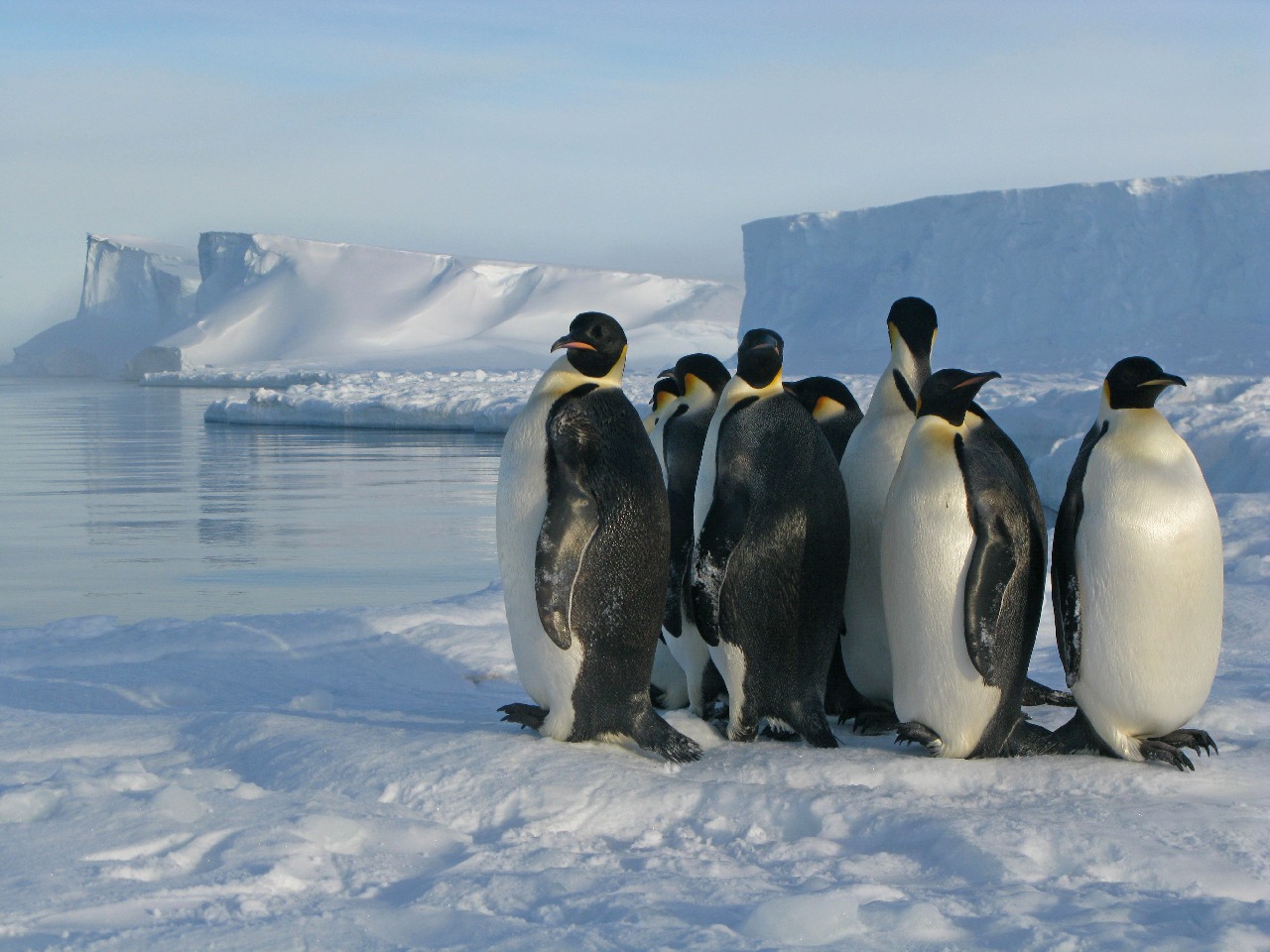
Penguins
Emperor penguins (Aptenodytes forsteri) on sea ice at the Brunt ice shelf. Penguins require Antarctic sea ice to breed.

Antarctic sea ice is a critical factor in our overall understanding of climate change. Sea ice formation around the Antarctic acts as an engine for ocean currents and influences weather patterns. It also protects the exposed edges of the ice shelves from waves, curbing Antarctica’s contribution to sea level rise. Sea ice is also vitally important for marine life – scientists have observed catastrophic breeding failures of emperor penguin colonies because of low sea ice in recent years.   

Studies like this one are therefore critical to find out how likely rapid sea-ice losses are, and if sea ice is likely to stay low over the coming decades. 

CMIP6 models rarely simulate Antarctic winter sea-ice anomalies as large as observed in 2023 by Diamond, R., et al is published today in Geophysical Research Letters. 
DEFIANT fieldwork update, December 2022

By Gaelle Veyssiere

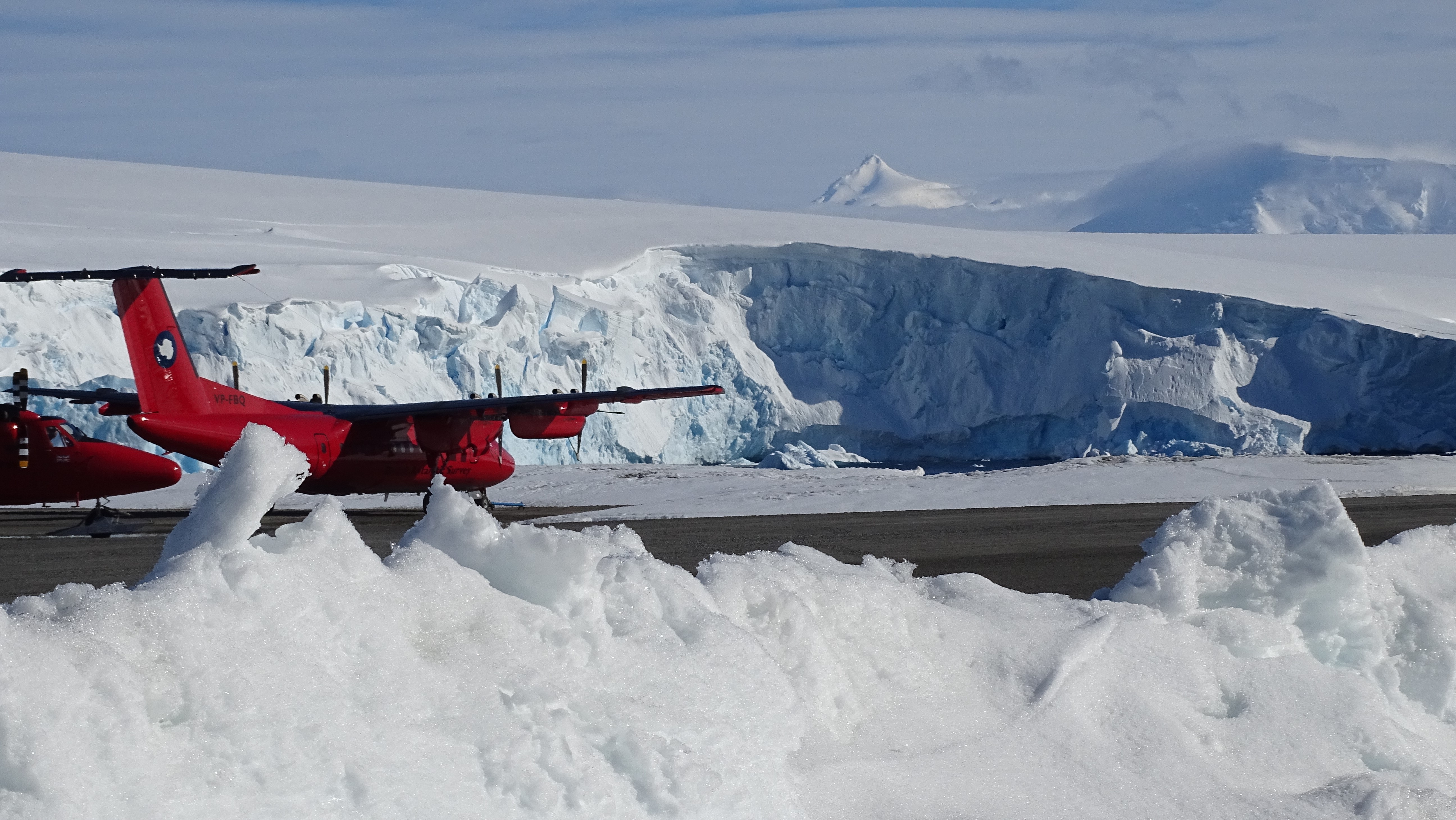
Dash-7 aircraft on the runway at Rothera

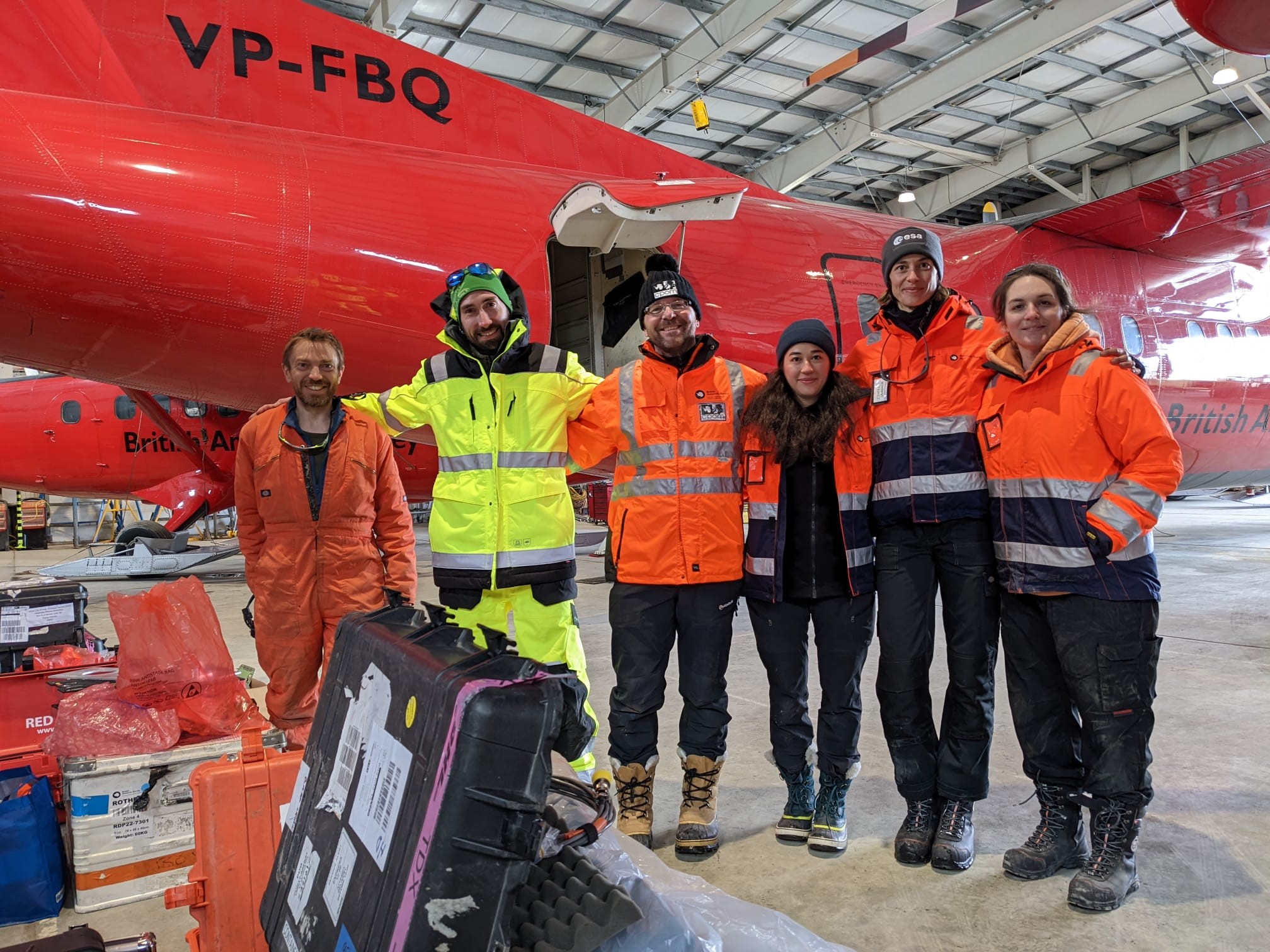
We arrived in Rothera on Monday 5th December. After training to navigate around the station and the recreational areas, we started cracking up on the tasks to do. The land ice team (Andy Shepherd and Ines Otosaka) prepared their corner reflectors and carried on deploying them on land ice on Adelaide Island before the Dash-7 team (Isobel Lawrence, Sebastian Bjerregaard Simonsen, Carl Robinson and Gaelle Veyssiere) flights. In the meantime, the Dash-7 team started planning the flights and preparing the Dash-7 to operate the science survey. We are very lucky as we’ve mostly had clear weather and the conditions are optimal for the campaign. The land ice team are now collecting and analysing land ice cores while the Dash-7 team survey the satellite orbit tracks daily. Life on station is great, everyone is supportive and helping and it is an amazing environment to work from.

Members of the DEFIANT team posing infront of the Dash-7 aircraft

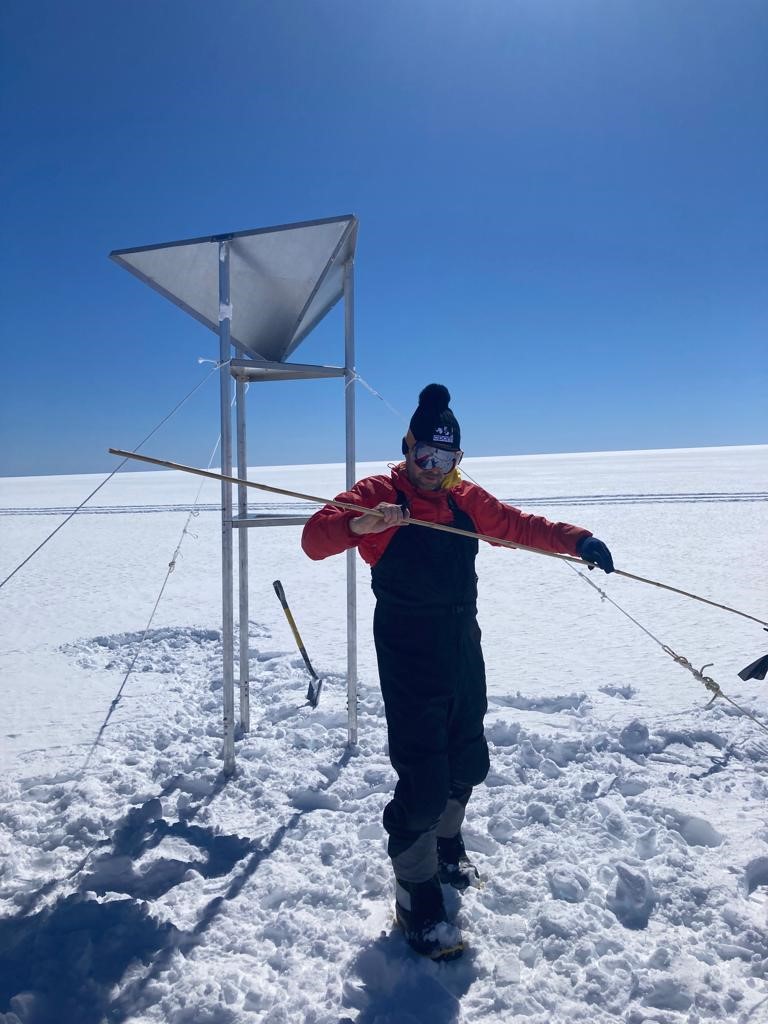
Andy Shepherd preparing corner reflectors on Adelaide Island

First DEFIANT Paper published by John Turner

Record Low Antarctic Sea Ice Cover in February 2022

John Turner, Caroline Holmes, Thomas Caton Harrison, Tony Phillips, Babula Jena, Tylei Reeves-Francois, Ryan Fogt, Elizabeth R. Thomas, C. C. Balish

Key Points

  • Antarctic sea ice extent dropped to a record low level of 1.92 × 106 km2 on 25 February 2022
  • There were negative sea ice anomalies in all sectors of the Southern Ocean, with the largest in the Ross and Weddell Seas
  • Deep storms in October/November 2021 led to low sea ice concentration and a large coastal polynya that accelerated sea ice loss

Update from the ice #1

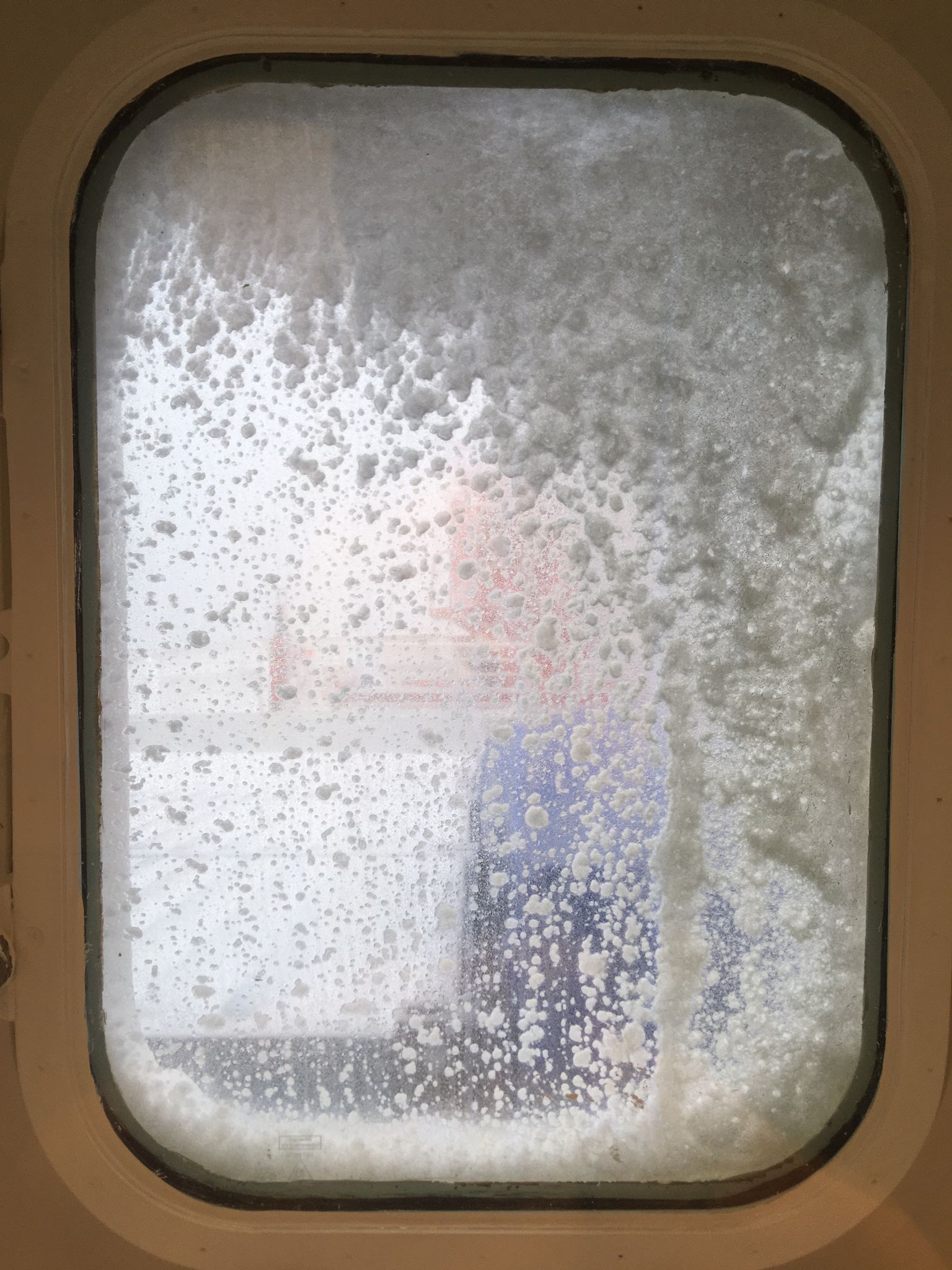
current visibility!

Today all work outside has been halted due to the high winds and low visibility (the atmospheric pressure sensor on our buoys registered 960 hPa), so this gives an ideal opportunity to update everyone with our progress.

We, the DEFIANT team (Robbie, Povl and Jeremy) have slotted in with our fellow shipmates (from 11 different countries) into the rhythm of the cruise.  Really great bunch of people on board, and we could not ask for a better group.  It is mainly a biological cruise, so we are learning a lot about the beasties that swim in the polar oceans; but of course there are strong links between the physics of DEFIANT and ecosystem dynamics.

Just yesterday we transitioned from open-ocean oceanography into the sea-ice zone for the first time; mainly young ice (pancake and frazil). In fact, we were meant to have our first ice station today, but this storm put an end to this.  We were scheduled to use the mummy chair (a metal basket used to get people on the ice) to perform measurements over this new ice type.  We were going to (i) put the radar in the mummy chair and Robbie was going to perform measurements at different heights above the young ice and (ii) Povl and Jeremy were to perform light attenuation measurements over and under the ice young ice from the mummy chair.

Looking out the window it is hard to imagine we were to do these experiments as the new ice has been smashed up and we are looking at an angry sea. Once the storm passed, ice will reform and we will attempt another ice station.

Robbie in the completed radar

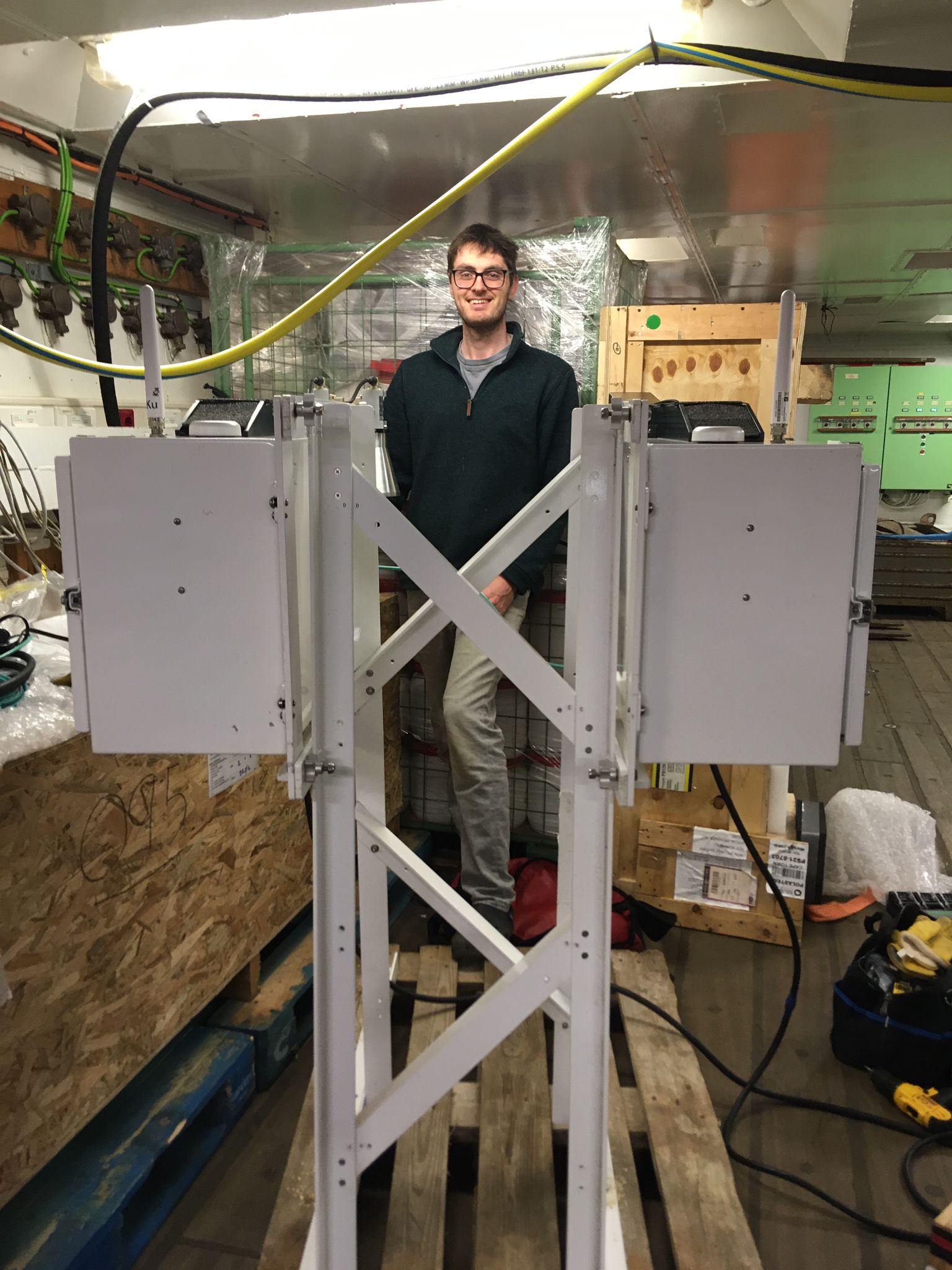
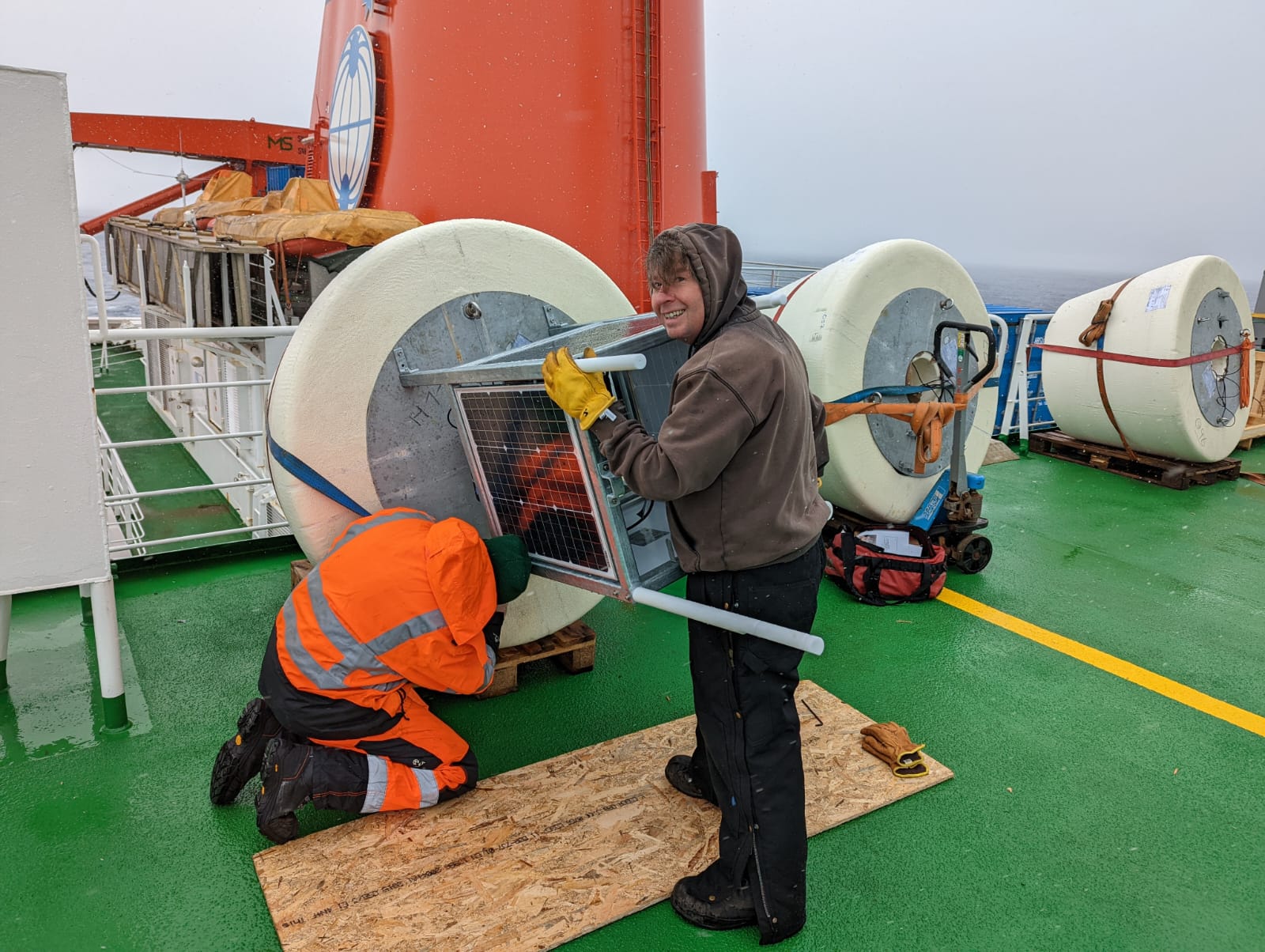
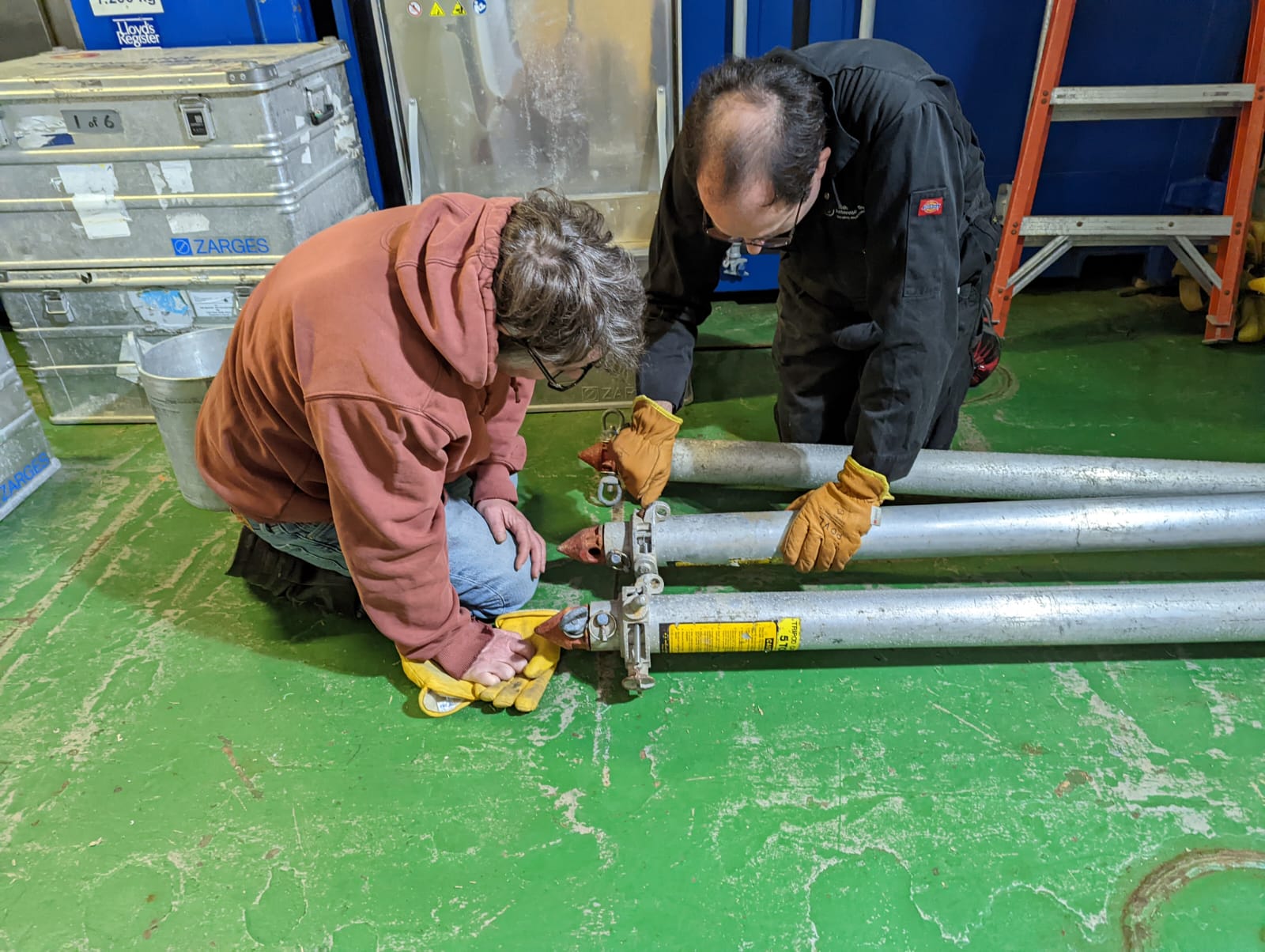
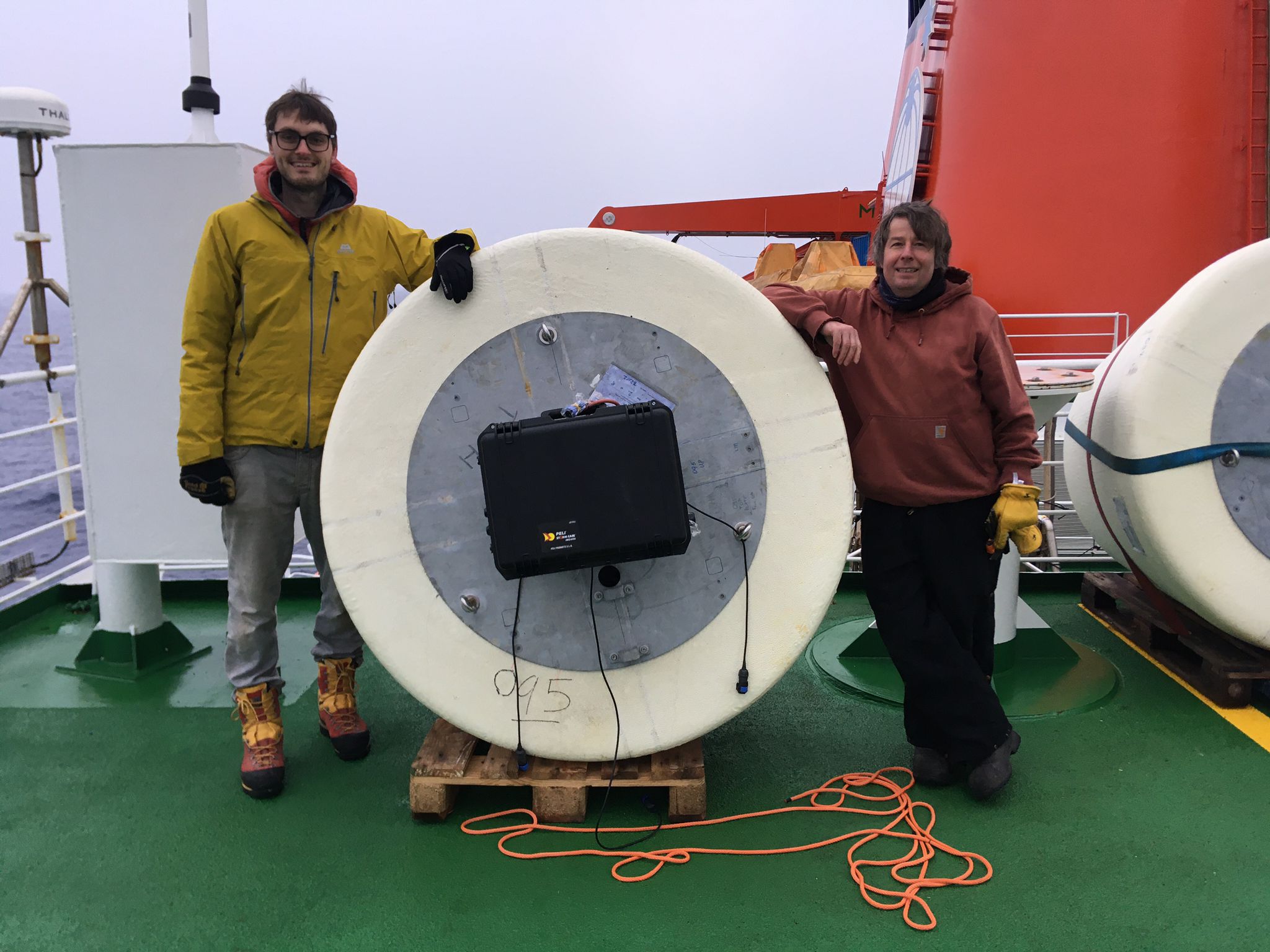
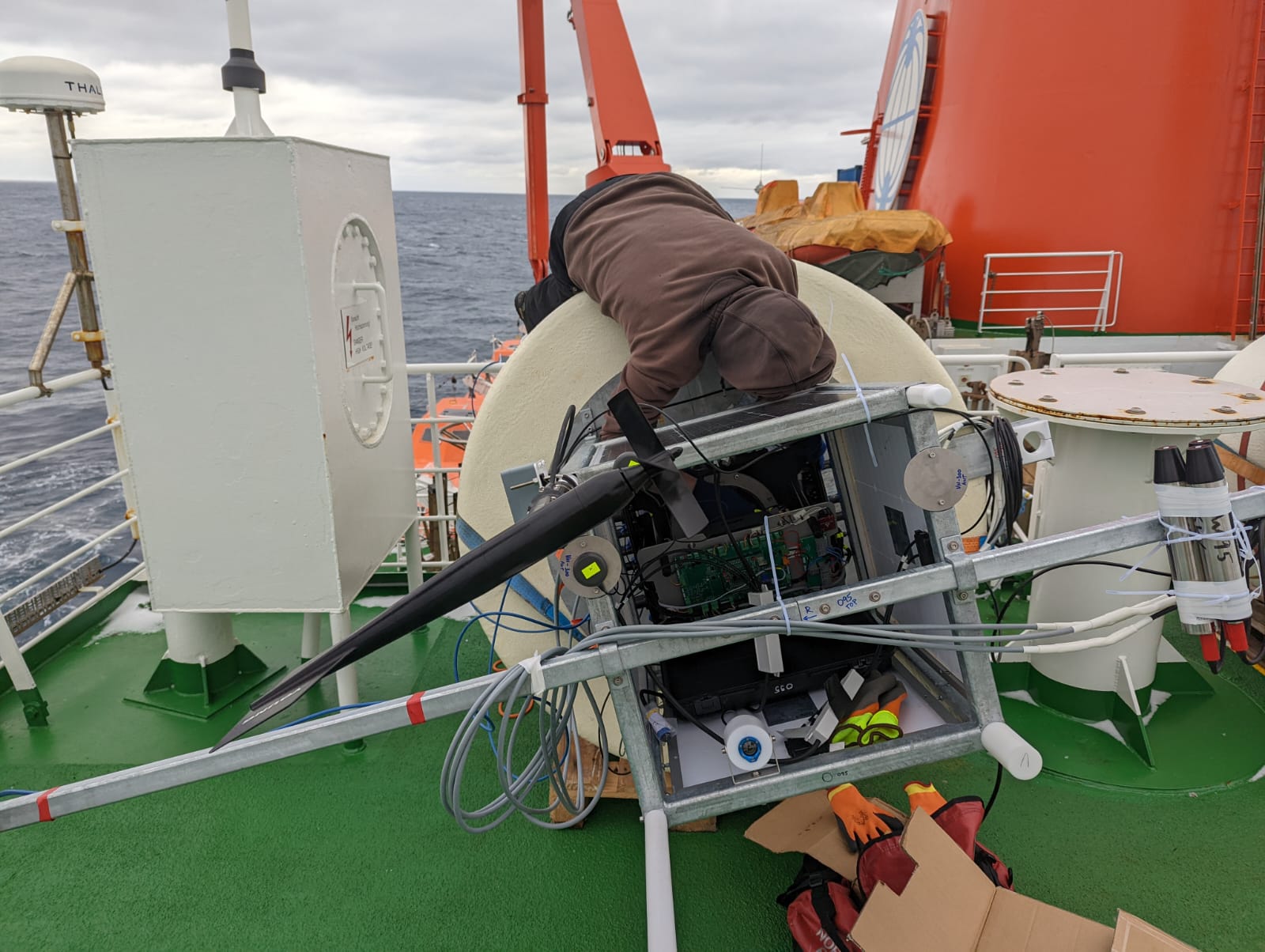
Other news is that Povl has been busy with the Chi Pods for the turbulence measurements from the CTD and O-18 sampling is well on the way.  Robbie has his Radar operations nailed down and calibrated.  We built up the three WIMBO (Waves and weather, ice mass balance and ocean) buoys on the upper deck of Polarstern, and have been working our way through the various snags that have been identified.  The good news is that all sensors are working and sampling and they are sending data as we expected.  Great job by the Bruncin team to get these ready in such a tight timeline!  Over the next few days we will turn them off and get them ready for deployment (probably still around 10 days off). The Ice Tethered Profiler (ITP) surface unit has been tested, and we have run through the deployment procedure for the ITP (it is complex).  We have also done a similar procedure with the MSS turbulence setup and the KuKa radar work.  So we are all rearing to get on the ice.

Over the next few days we will concentrate on performing radar and light measurements over the new ice. So an exciting few days in front of us…

Preparations underway

The team are clearly glad to be out of their 10 day quarantine in a hotel in Cape Town, and are enjoying the sunshine on deck (after the storms that kept them in) – preparing kit to be deployed.

Ice Mass Balance Buoys

In the coming days, the team will be deploying these Wave and Ice Mass Balance Buoys (that were custom made over the last few months, in super-quick time thanks to Bruncin – Lovro and his team in Croatia who worked overtime to get these built in only a few months since the project started in December.

This is Jeremy with the Wave and Ice Mass Balance Buoys

These buoys shown, with PI Jeremy Wilkinson, will be deployed in the #WeddellSea. They measure the energy balance of the snow – how much sunlight and thermal energy it absorbs and emits, as well as how much heat the snow gives and receives from the ice and ocean below.

Ice-Tethered Profiler

In addition, the team will be deploying and Ice-Tethered Profiler (below). It will be only the second to be deployed on the Antarctic sea ice!

Ice tethered profiler, being prepped and checked by Jeremy and Povl.

It will measure the properties of the water under the ice, helping to explain what controls when it melts and grows. It needs to be lowered on a cable attached to a rope, so it’s incredibly important that we tie the rope on properly and don’t drop the whole thing into the sea. So some ropework practice is needed:

These will be deployed next week or so, after the AWI ship PolarStern resupplies the German Antarctic Base.

Before that will be glider deployment for sister project SO-CHIC…. to follow…

Shackleton’s Endurance found

The finding of The Endurance is an amazing feat, as is how well it has been preserved. The DEFIANT team are on their way to the Weddell Sea, where the Endurance was lost 107 years ago. Although Shackleton’s goal was to cross Antarctica, he and his crew did a lot of research on the way. This early understanding has paved the way for projects like DEFIANT.

The buoys that will be deployed (from the PolarStern) in the coming days will drift with the ice, and take a similar route. The will experience similar conditions to the Endurance, but hopefully will not sink. We’ll have photos and videos in real time, so you can get a view of what the drift trapped in the ice might have been like. As these are unmanned drifting buoys, there won’t need to be a focus on finding food and fuel to survive, so they will be monitoring the ice, the ocean, and the atmosphere.

https://www.bbc.co.uk/news/science-environment-60662541

The DEFIANT team are on the PolarStern, which is about half way to the Weddell Sea from Cape Town.

Follow the PolarStern’s progress

Onboard the PolarStern

The DEFIANT field team, Jeremy, Povl, and Robbie, are now on the PolarStern in South Africa, ready to head to Antarctica for DEFIANT’s first field season.

Fish-eye sunset!

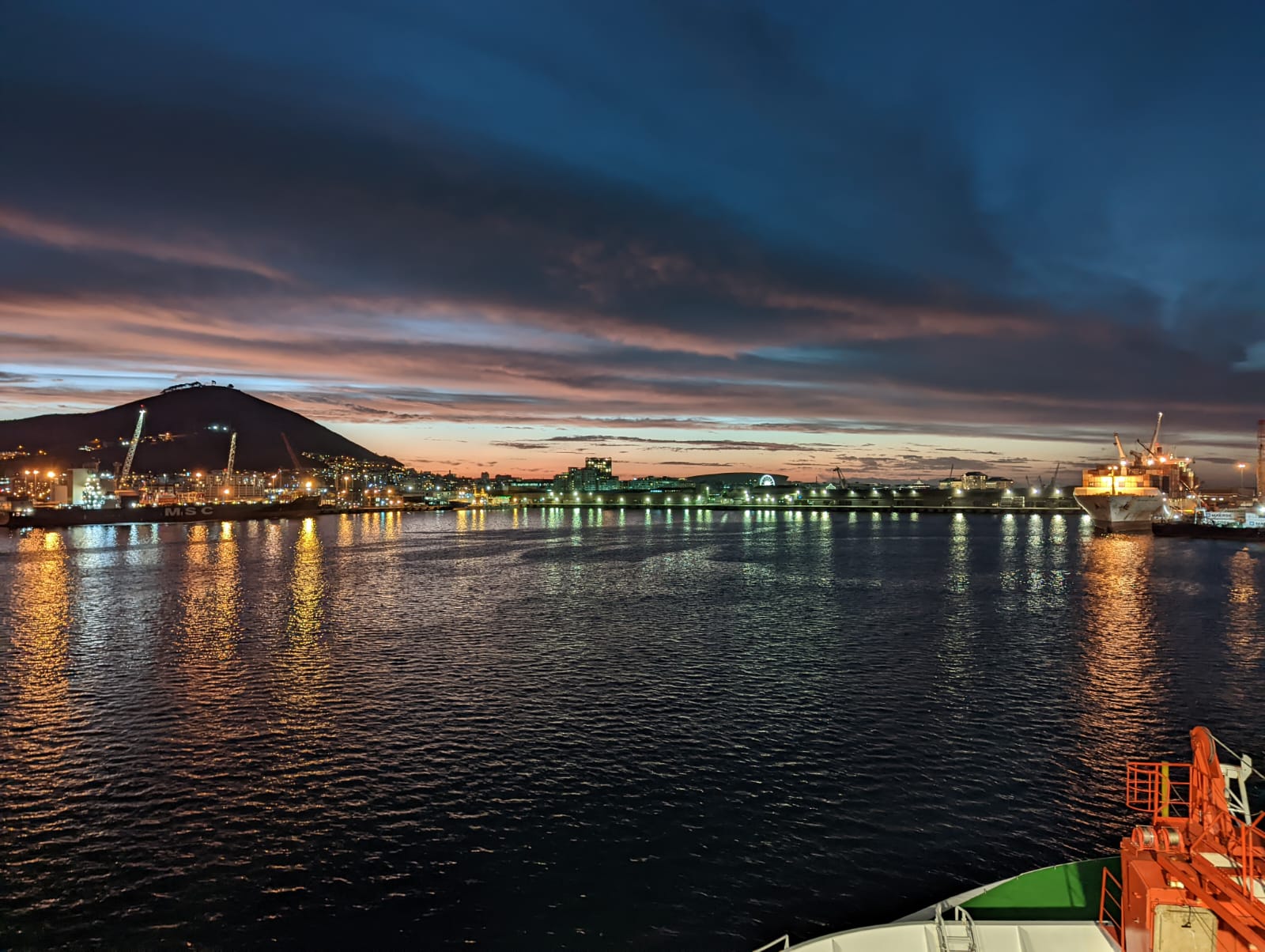
Here’s the view of Cape Town from the ship

Preparing to Sail

DEFIANT PI Jeremy Wilkinson (BAS) is in quarantine in a hotel in Cape Town, South Africa, with Povl Abrahamsen (BAS) and Robbie Mallet (UCL), who will join the PolarStern, the icebreaker of the Alfred Wegener Institute, heading South on first field season to the Weddell Sea.

DEFIANT funded!

The DEFIANT project has been signed off by NERC and all the project participants, and started on the 1st December 2021 – so build of buoys could get underway to be deployed in the Weddell Sea in March 2022.

More info will be added in due course, and we are in the process of developing this website. Apologies for appearance in the mean time.